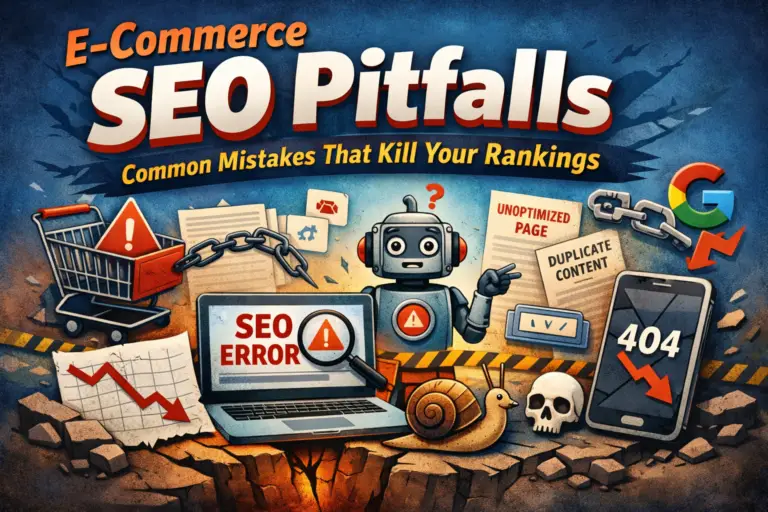
E‑commerce SEO has become more complex than ever in 2026. With AI-driven search engines, evolving algorithms, and rising customer expectations, even small mistakes can drastically affect your online store’s visibility. Understanding common mistakes and avoiding them is essential for any online retailer who wants to dominate search rankings and boost conversions.
1. Ignoring Keyword Research and Intent
One of the biggest mistakes in e‑commerce SEO is neglecting proper keyword research. Many store owners focus solely on high-volume keywords without considering search intent. For instance, targeting “buy running shoes” without understanding whether the audience is looking for reviews, discounts, or specific brands can waste your SEO efforts.
To avoid this, use tools like Google Keyword Planner or SEMrush to analyze long-tail keywords and match them to buyer intent. This ensures your content attracts users who are ready to convert.
2. Poor Product Page Optimization
Product pages are the backbone of e‑commerce SEO. Common E-commerce SEO mistakes include missing title tags, meta descriptions, or high-quality images. Duplicate product descriptions and thin content are also major ranking killers.
Each product page should include:
- Unique descriptions that highlight benefits and features
- Optimized headings (H1, H2) with relevant keywords
- Alt text for images
- Internal links to related products or categories
3. Weak Site Structure and Navigation
A confusing site structure can hurt both user experience and SEO. Search engines struggle to crawl poorly organized websites, and customers may leave due to frustration.
Ensure your website has:
- A clear category hierarchy
- Easy-to-use filters and search functions
- Breadcrumb navigation for better indexing and usability
4. Ignoring Mobile SEO
With over 70% of online shopping done via mobile devices in 2026, a non-mobile-friendly website is a serious ranking issue. Slow-loading pages, unresponsive designs, and difficult navigation can increase bounce rates and reduce rankings.
Use responsive design, compress images, and leverage mobile-first indexing to keep your e‑commerce site competitive.
5. Neglecting Technical SEO
Technical SEO issues such as broken links, missing canonical tags, slow page speed, or improper schema markup can severely impact rankings. Many store owners overlook these elements, focusing only on content creation.
Regularly audit your website with tools like Google Search Console, Ahrefs, or Screaming Frog to identify and fix technical errors. Implementing structured data for products and reviews can also improve your visibility in rich search results.
6. Failing to Build Quality Backlinks
Backlinks remain a critical ranking factor. E‑commerce sites often ignore link-building, assuming product pages will naturally attract links. Without authority signals, your store may struggle to compete with larger, established brands.
Focus on:
- Guest posting on niche blogs
- Partnering with influencers
- Creating shareable content like infographics or guides
Conclusion
Avoiding these common e-commerce SEO mistakes can make the difference between thriving online and being invisible in search results. Prioritize keyword research, optimize product pages, maintain a strong site structure, and focus on technical SEO. Combined with quality backlinks and mobile-friendly design, these strategies will help you dominate search rankings and increase sales in 2026.